European Championship Official Match Balls: A Complete History from 1968 to 2024
The European Championship has seen a remarkable evolution in official match balls since records began in 1968. No balls are registered for the tournaments
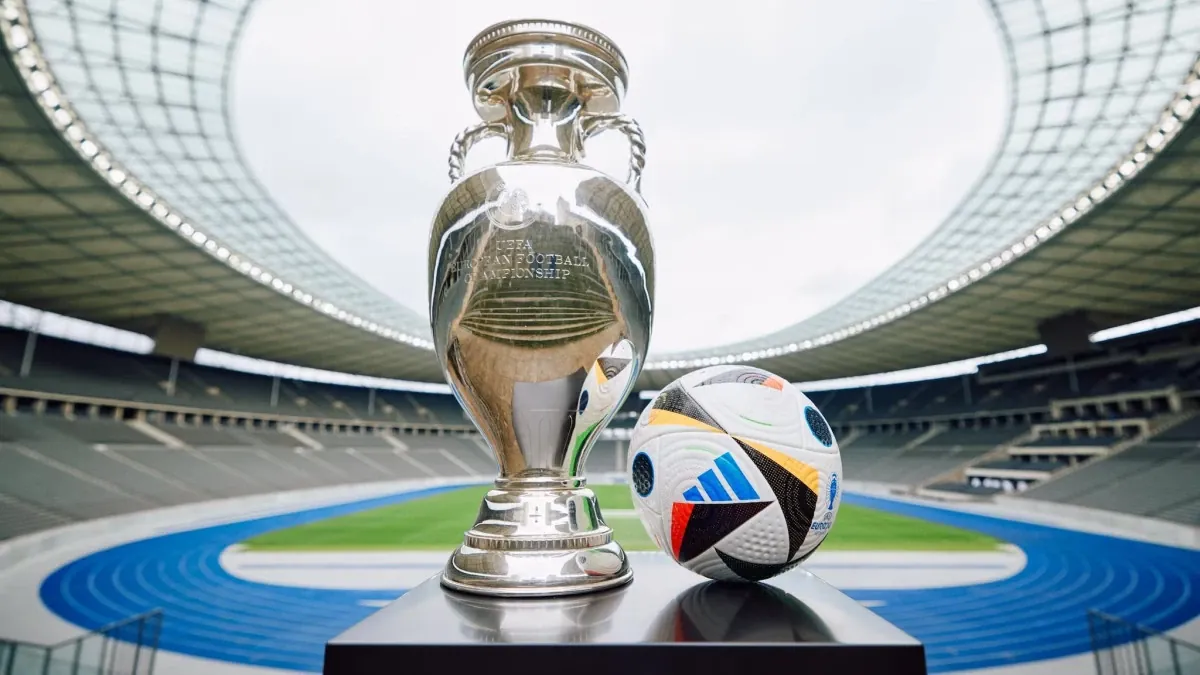
The European Championship has seen a remarkable evolution in official match balls since records began in 1968. No balls are registered for the tournaments of 1960 and 1964. Every ball used since 1968 has been produced by Adidas, showcasing significant changes in construction, materials, and design. This article presents each ball in chronological order, highlighting the key features and inspirations behind them.
1968 – Adidas Telstar Elast
The first officially registered European Championship ball. Named after the Telstar communications satellite, its spherical shape and panel layout were inspired by the satellite’s design.
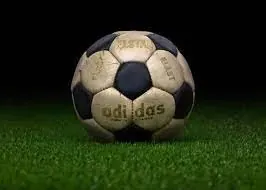
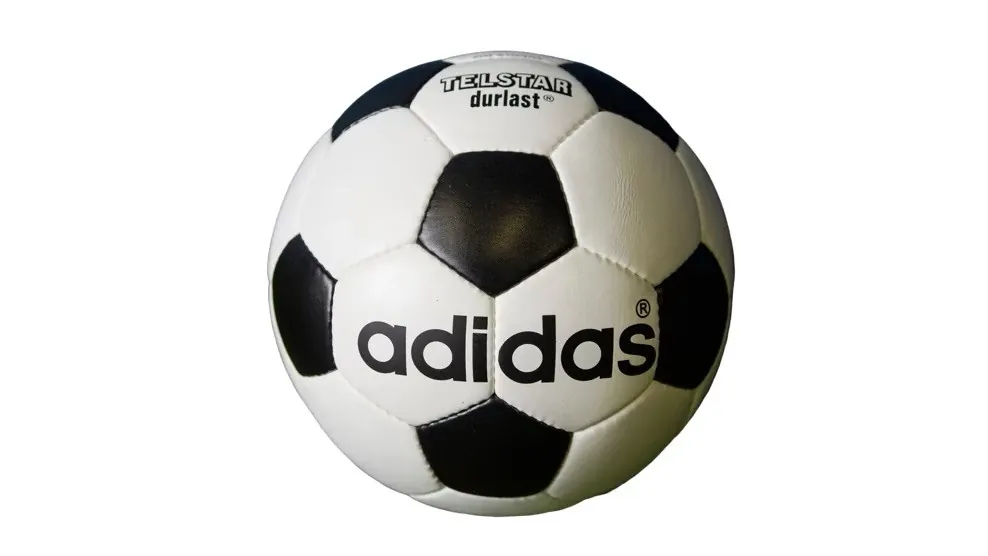
1972 & 1976 – Adidas Telstar Durlast
A slight evolution of the Telstar Elast. Improvements included enhanced water resistance and refined panel construction.
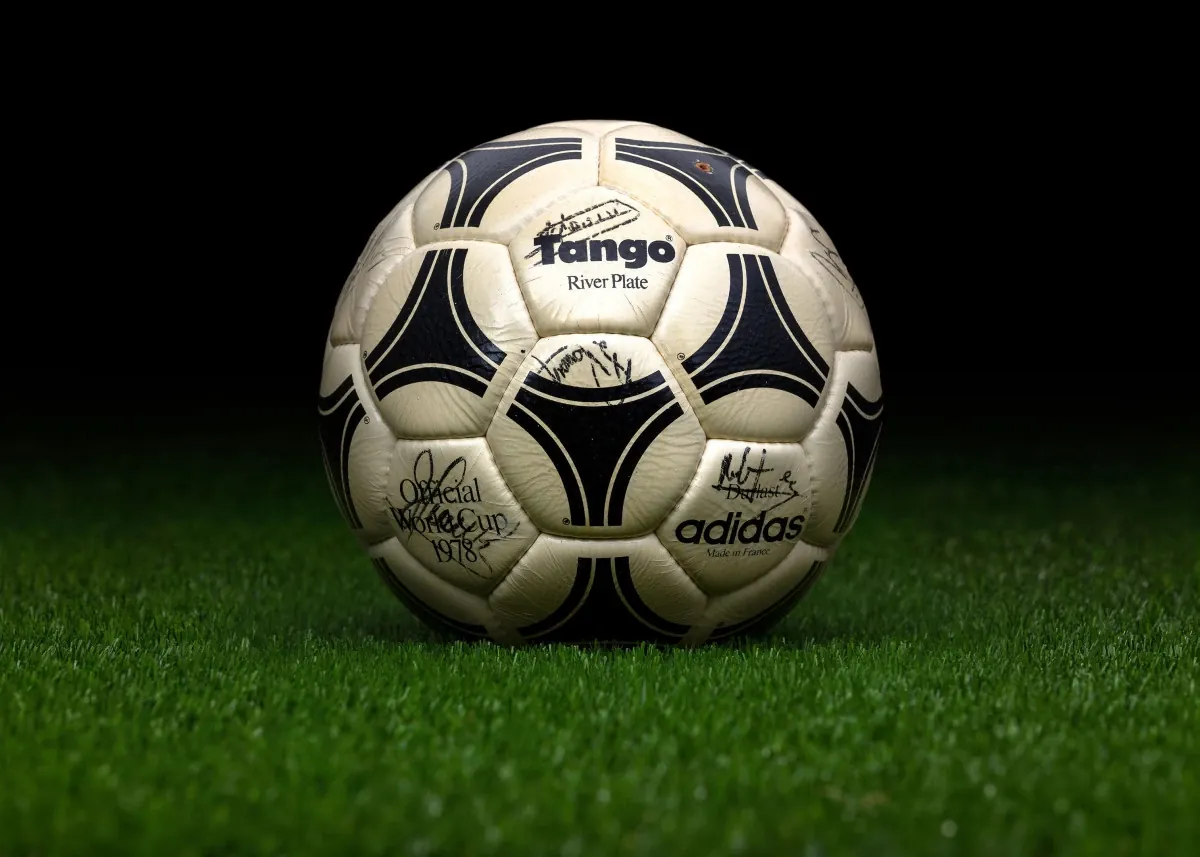
1980 – Adidas Tango River Plate
The first ball to adopt the Tango design, originally from the 1978 World Cup. Its panels were redesigned and featured nods to Argentinian culture.
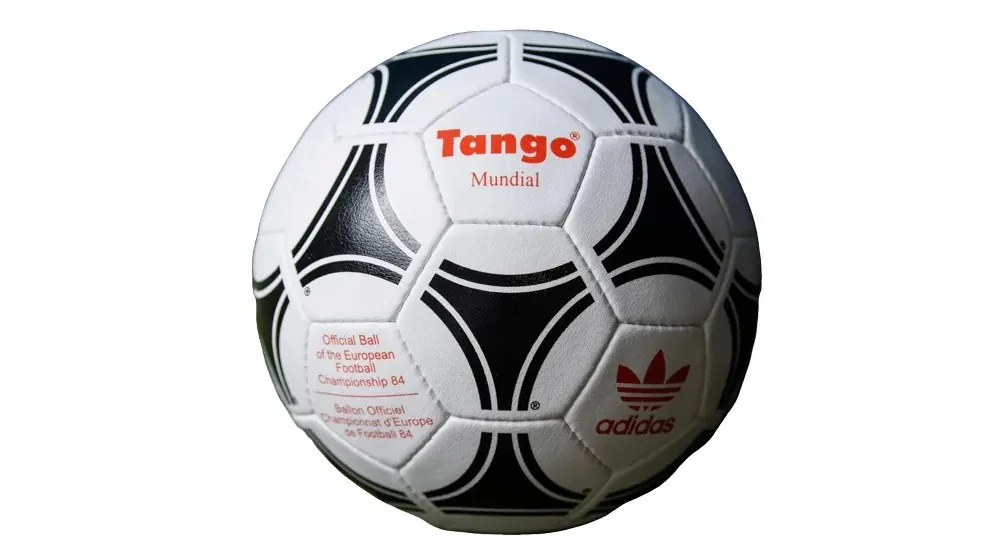
1984 – Adidas Tango Mundial
The first match ball to be made from non‑leather materials, with an improved layering system. Its design was very similar to the previous Tango but featured customisation for the European Championship.
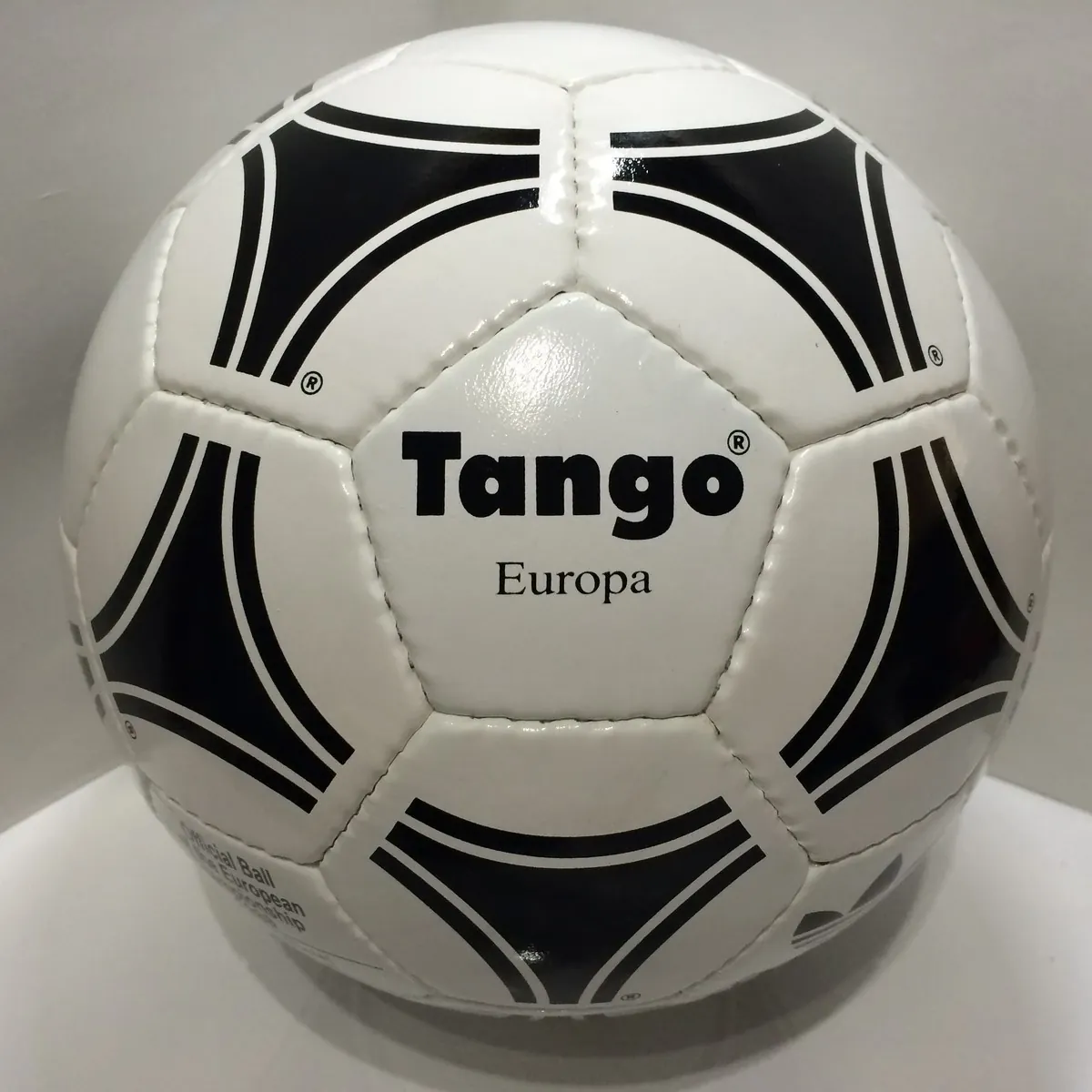
1988 – Adidas Tango Europa
Retaining the same basic design as the 1984 ball, this version had improved stitching and a new panel treatment. From this point onward, preventing water accumulation during matches became a design focus.
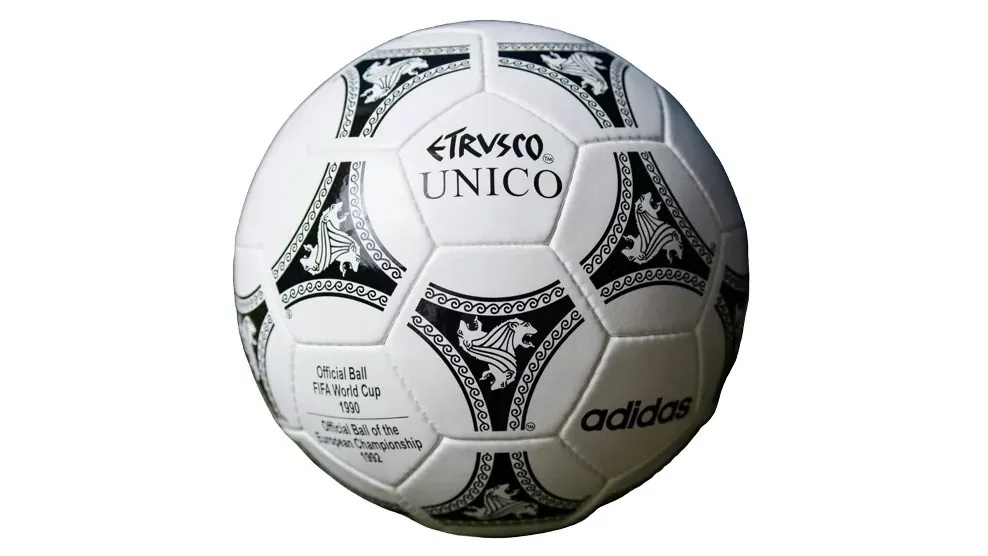
1992 – Adidas Etrusco Unico
A completely new design that had also been used at the 1990 World Cup. The ball’s pattern incorporated representations of Etruscan history, including lion heads, as a tribute to Italy.
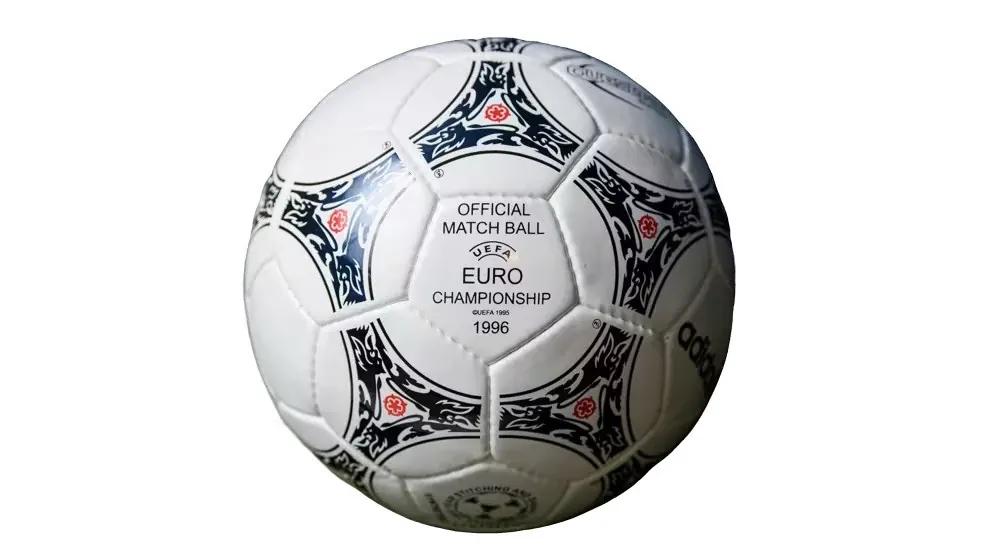
1996 – Adidas Questra Europa
The first ball to feature a colour design, moving away from the classic black and white. It paid homage to the host nation England by incorporating lions and red roses into its pattern, using the same layout as the Etrusco Unico.
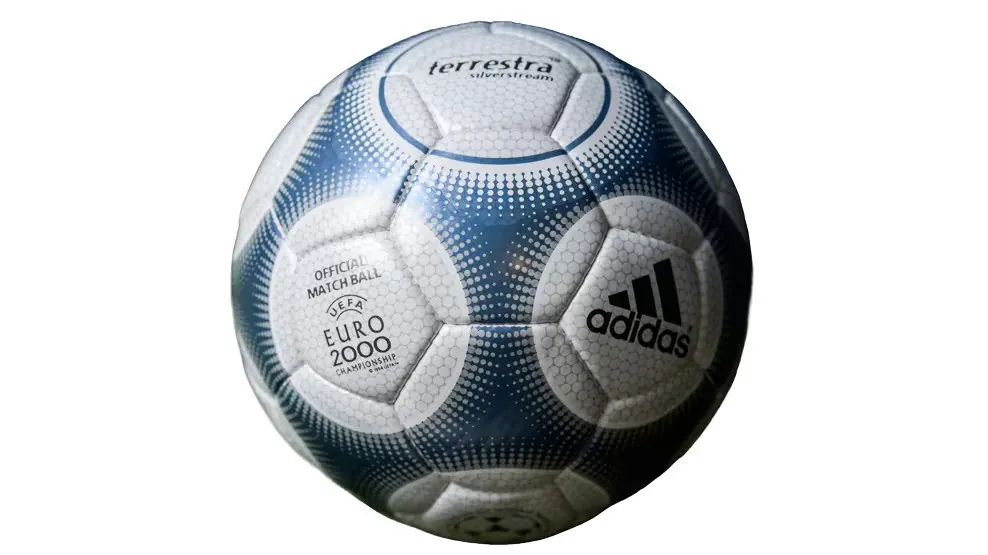
2000 – Adidas Terrestra Silverstream
Representing the co‑hosts Belgium and the Netherlands, this ball emphasised both technology and design. It introduced new panels with an additional layer to improve control and provide a smoother strike.
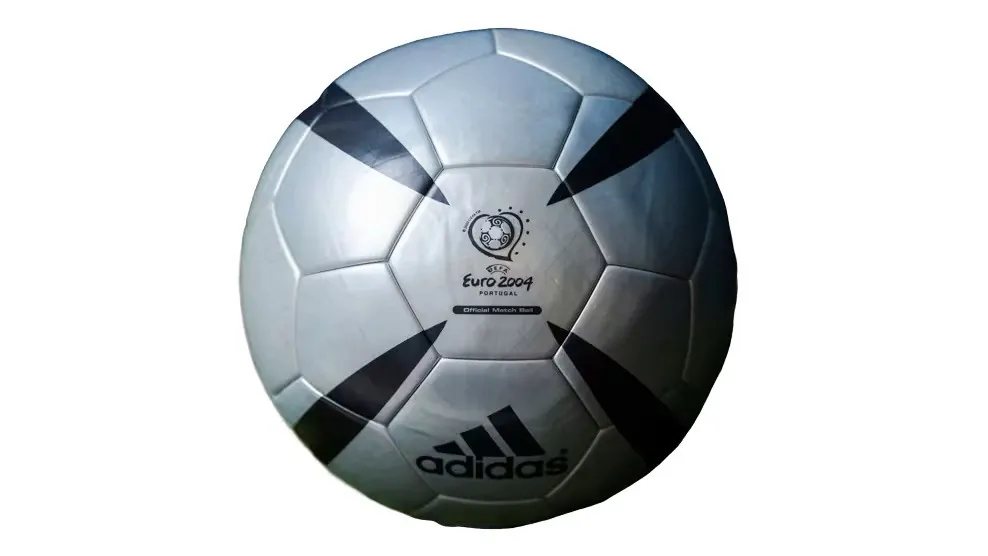
2004 – Adidas Roteiro
A ball that changed the design concept entirely, featuring a silver background instead of the traditional white. The name “Roteiro” means “navigation map” in Portuguese, referencing the voyages of Portuguese explorers. The tournament was held in Portugal.
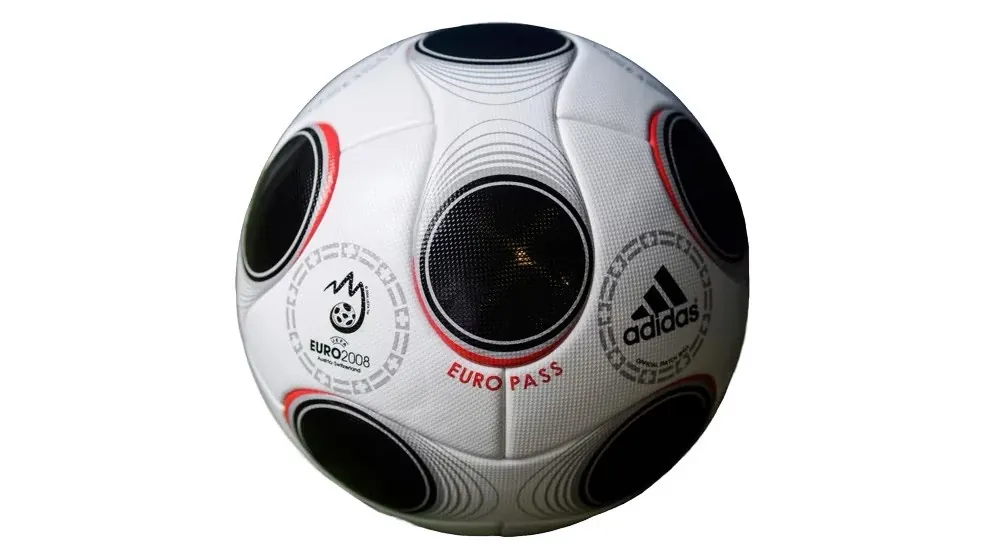
2008 – Adidas Europass
The panel design was modified to just 14 thermo‑sealed panels in a shape that relates to the movement of the ball. Micro‑textured panels were incorporated on the top surface to increase grip.
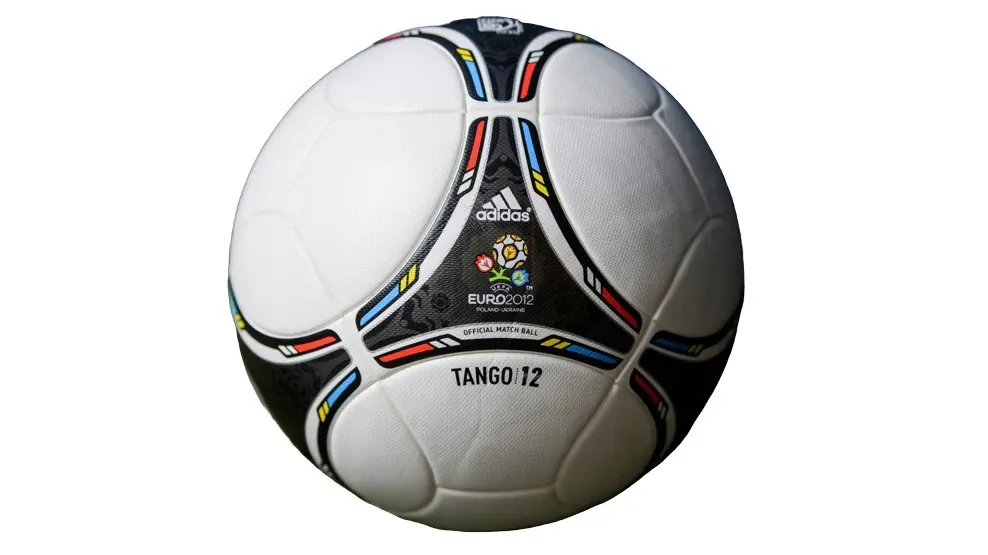
2012 – Adidas Tango 12
A reinterpretation of the classic Tango pattern. As a tribute to the co‑hosts Poland and Ukraine, the ball included details in the colours of their flags and patterns inspired by traditional cut‑out paper art from rural areas of both countries.
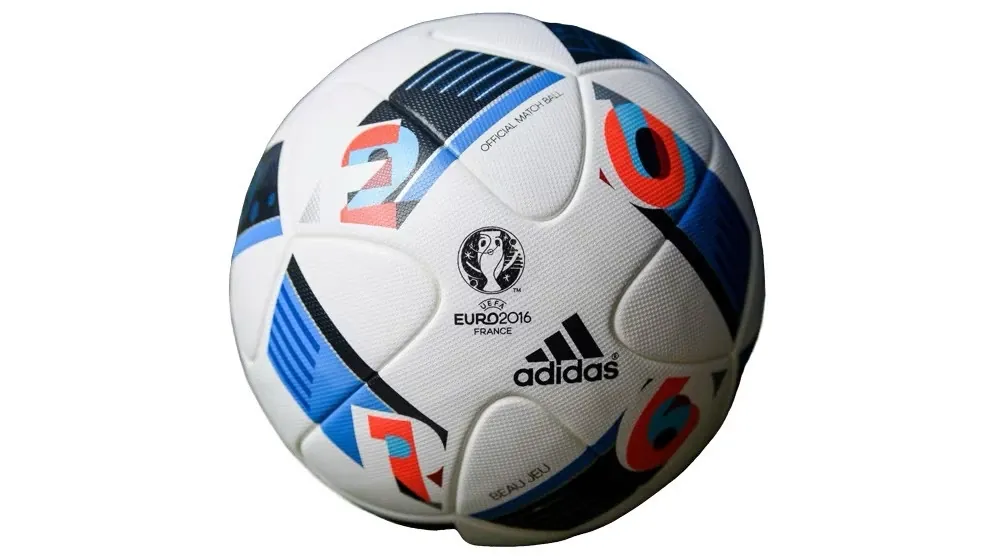
2016 – Adidas Beau Jeu
Literally meaning “play nice” in French, this ball was decorated in the colours of France (blue, white, and red) to honour the host nation.
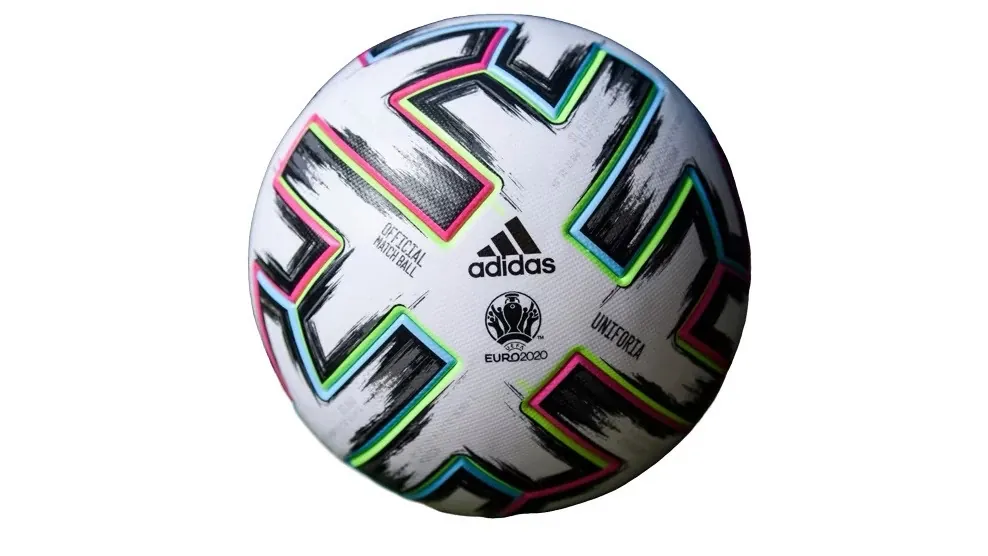
2020 – Adidas Uniforia
Representing the unity of Europe, this ball featured a design that symbolised the eleven countries that hosted matches during the tournament.
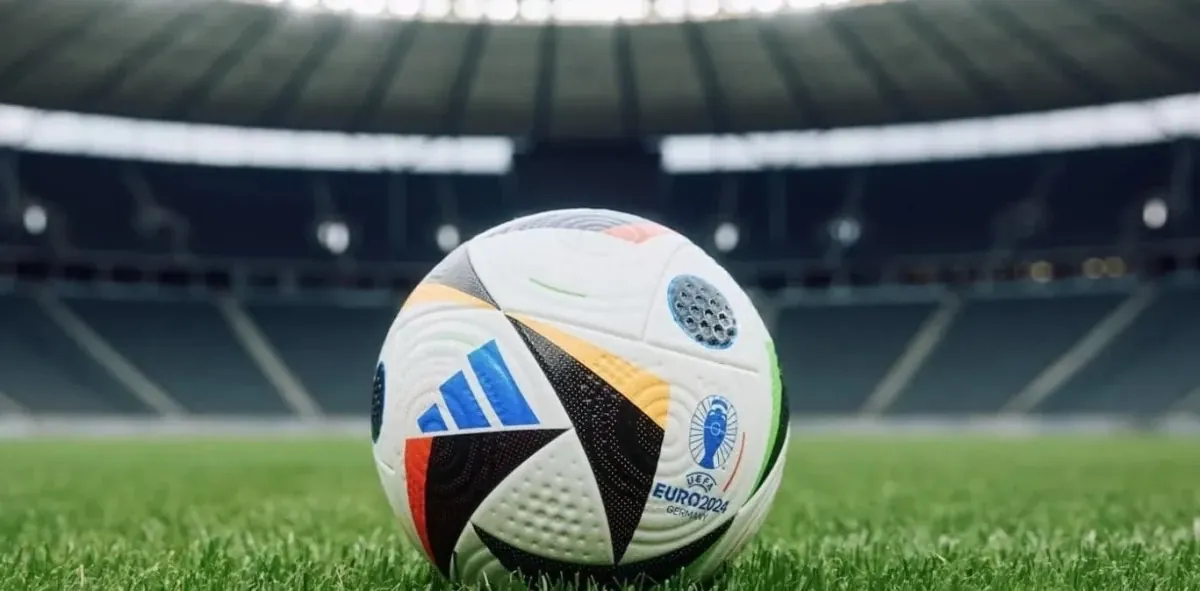
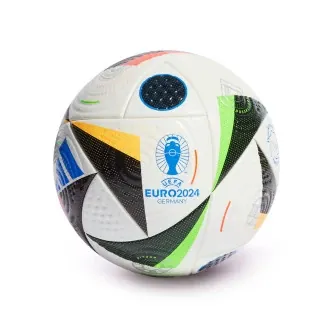
2024 – Adidas Fussballliebe
The ball for the 2024 tournament in Germany. “Fussballliebe” translates to “football love”. It features heat‑sealed panels and advanced technology to match the modern game.
Related search topics
- all euro cup balls
- all euro soccer balls
 WhatsApp
Looking for affordable football boots and jerseys made in China?
Message us on WhatsApp at +86 151 6027 2505, or find us on Instagram at @luxurycoca.
 Instagram