How to Spot Fake Football Boots: Warning Signs and Why Authenticity Matters
The global market for counterfeit products has expanded rapidly, moving from street vendors to hundreds of online stores. This illegal trade now heavily ta
The global market for counterfeit products has expanded rapidly, moving from street vendors to hundreds of online stores. This illegal trade now heavily targets the football boot sector. While cheap prices may be tempting, understanding how to distinguish genuine boots from fakes is essential for performance, safety, and long-term value.
Price as the First Indicator
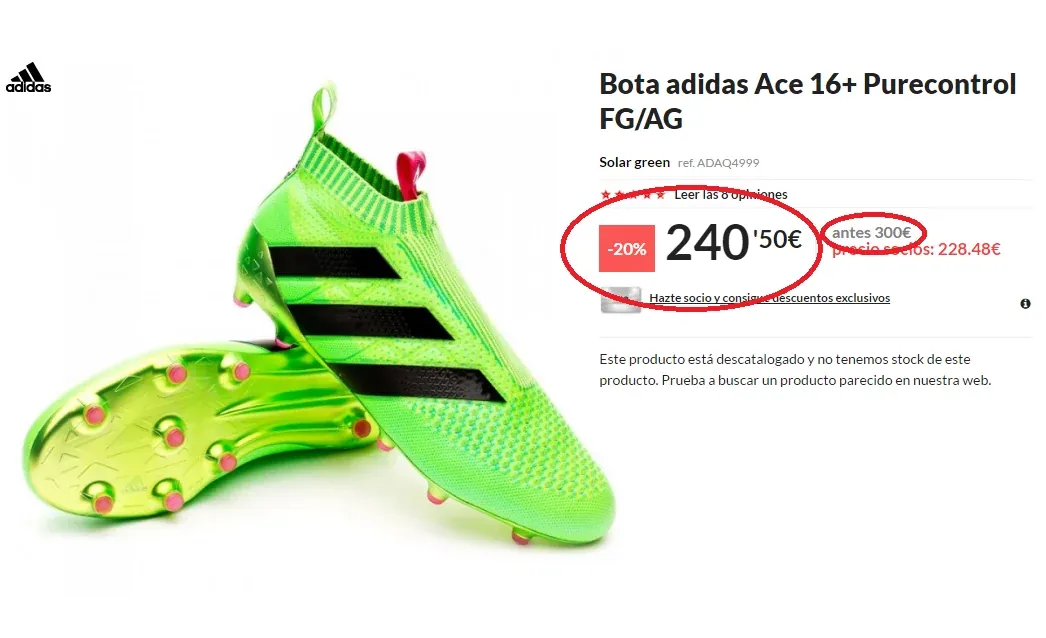
The most obvious clue is an unusually low price. If a boot that typically retails for €300 is offered for less than €100, it is almost certainly a fake. Legitimate sellers display the original RRP, while counterfeit sellers often show a fake discount from an RRP that is already below €100 – a price that never appears on the official brand website.
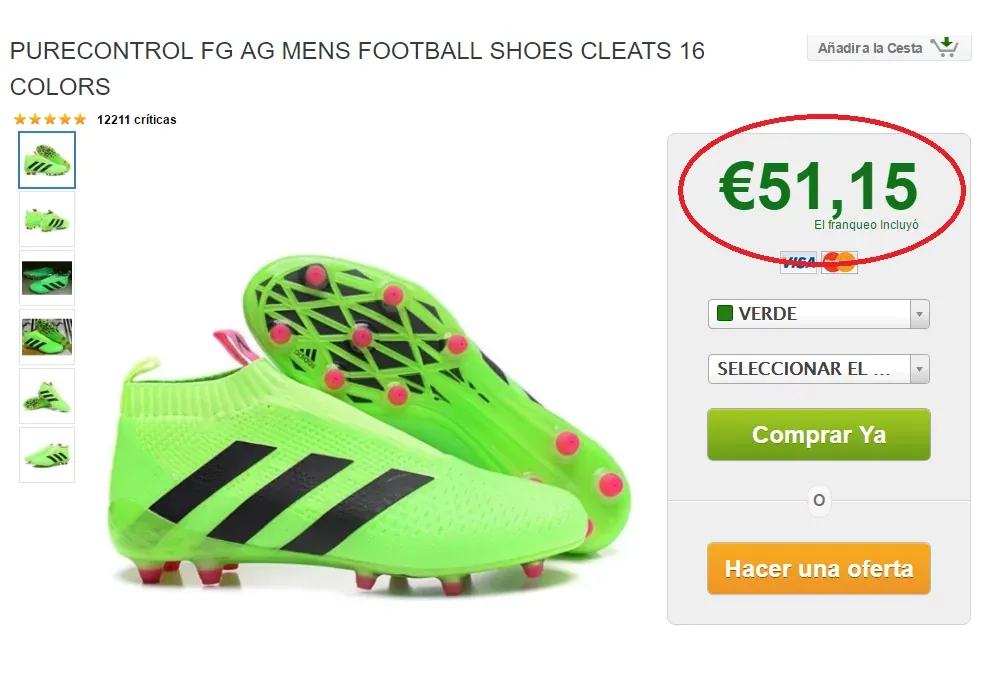
Imitation replica boots frequently lack any reference to the genuine retail price. Instead, they list only the reduced price, making it impossible to verify the discount against the brand’s official RRP.
Colorways and Design Clues
Fake boot websites often offer colour schemes and decorative patterns that do not exist for official models. Brands announce every new colourway through their own communication channels. If you cannot find a specific colourway on the brand’s official website or news, be suspicious.

Website Characteristics of Sellers
Counterfeit sites are easy to spot. They typically sell a huge range of unrelated goods – boots, fashion watches, bags, jeans, swimwear, perfumes – rather than specialising in football equipment. To avoid legal action, these sellers hide fake products by using names that do not appear in their own site search when you look for the original model name.
Visual Comparison and Materials
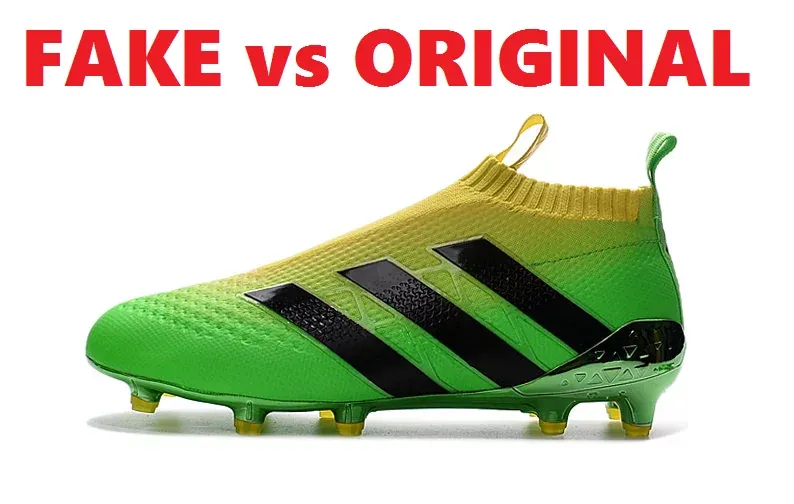
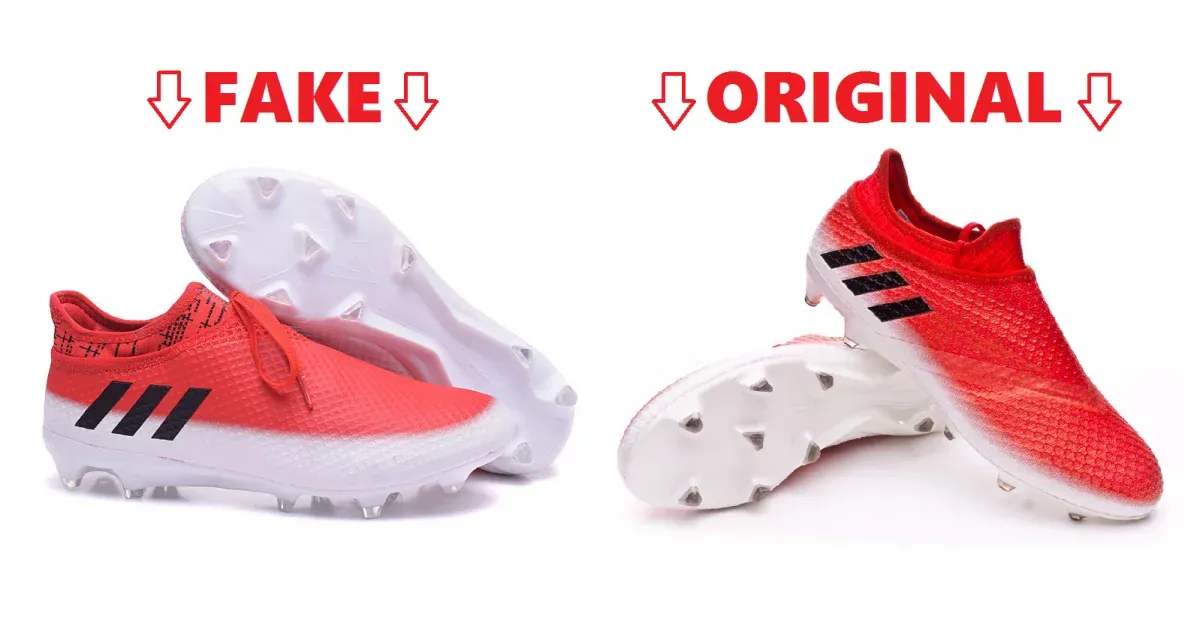
Some counterfeit sites use images of genuine boots to deceive customers. When the product arrives, it looks nothing like the picture. Even with more sophisticated fakes, side‑by‑side comparison with originals reveals clear differences in colour, shape, and build quality that anyone can notice.
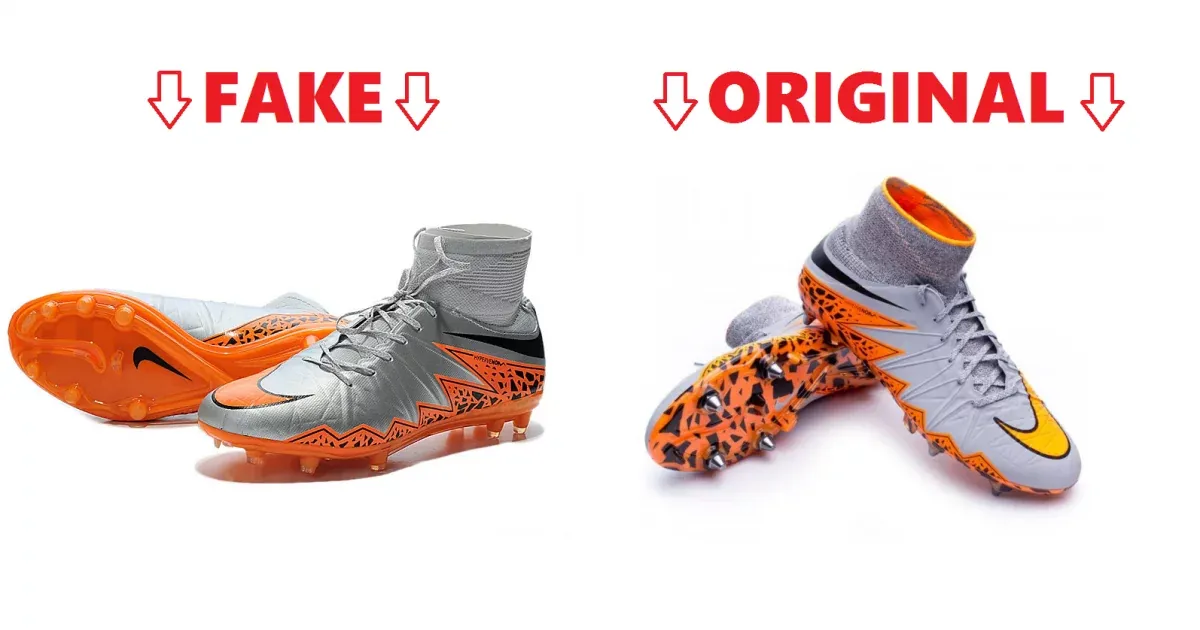
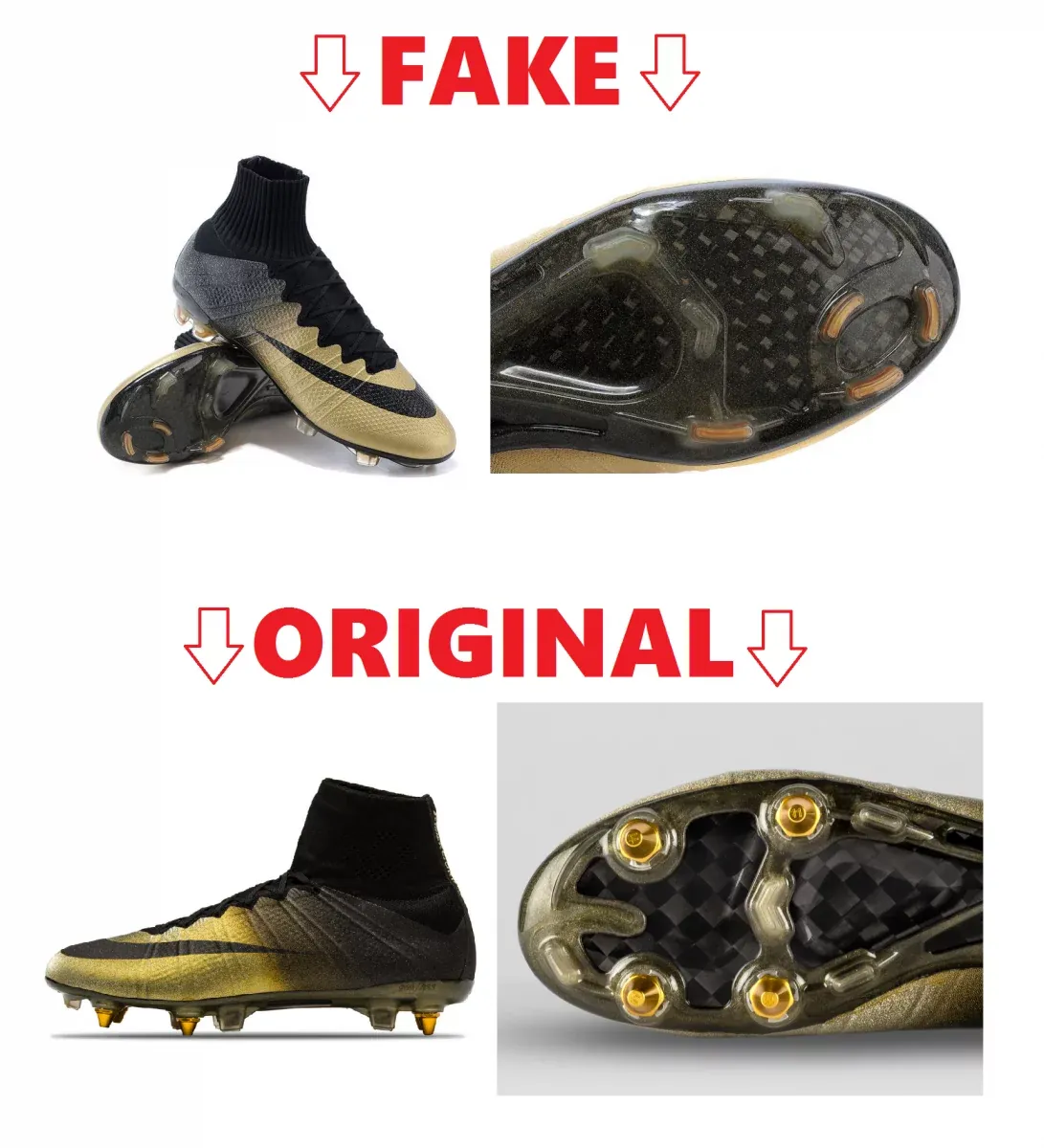
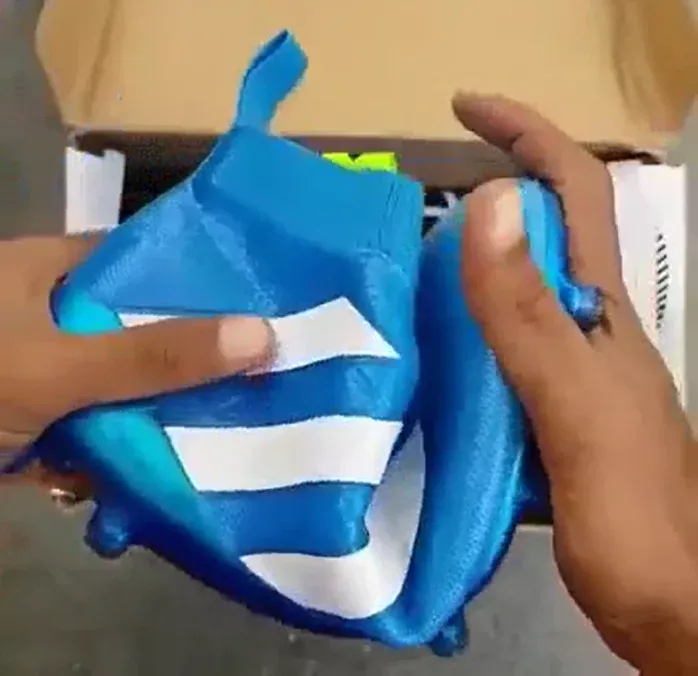
Beyond aesthetics, the materials used in fake boots are much cheaper. This directly affects durability. A genuine boot is designed through a rigorous process that analyses fixation, stability, resistance, and injury prevention. Replicas focus only on looking similar, ignoring functionality. For example, a fake boot may have an unstable sole that flexes in the middle, whereas a proper football boot should only flex in the metatarsal area.
Warranty and Injury Risks
Counterfeit boots come with no warranty. If a stud breaks or any other fault appears, the buyer loses the entire investment. More importantly, the lack of functional testing means these boots can cause serious injuries – such as breaking a heel or suffering from sole instability – because they are not designed for the stresses of the game. An injury is every athlete’s biggest fear, and using untested replicas greatly increases that risk.
False Economy of Fake Boots
Although fake boots are cheaper upfront, their poor durability means they last much less time. Replacing them multiple times can cost more in the long run than buying one pair of genuine boots. The supposed money saving is therefore not real.
Related search topics
- how to tell the difference between real and fake ostrich boots
- how to tell the difference between real and fake shoes
- how to tell the difference between real and fake nike shoes
- how to tell the difference between real and fake prada shoes
 WhatsApp
Looking for affordable football boots and jerseys made in China?
Message us on WhatsApp at +86 151 6027 2505, or find us on Instagram at @luxurycoca.
 Instagram