The Evolution of World Cup Footballs: A Complete History from 1930 to 2018
The football used at the FIFA World Cup has evolved dramatically over the decades, from leather balls with external lacing to high-tech synthetic spheres.
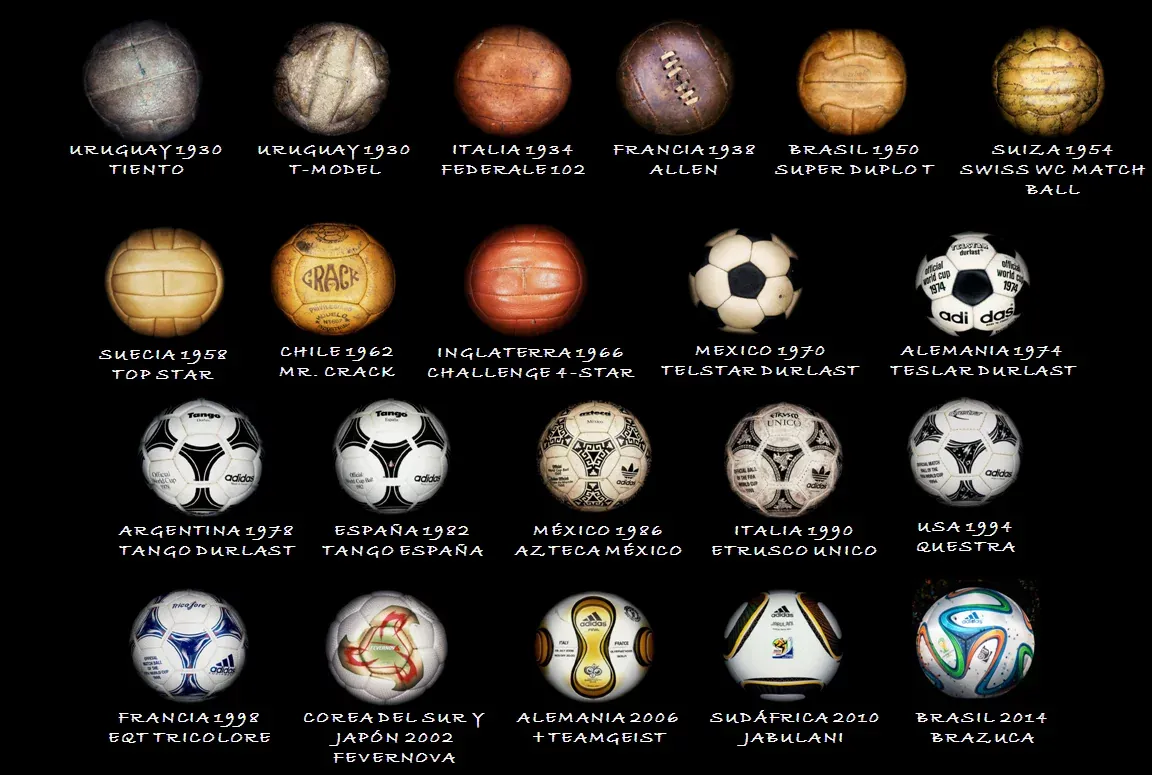
The football used at the FIFA World Cup has evolved dramatically over the decades, from leather balls with external lacing to high-tech synthetic spheres. Each tournament introduced innovations in design, materials, and performance. This guide covers every official World Cup match ball, from the controversial 1930 final to the NFC-chip-equipped Telstar 18.
1930 Uruguay – The Two-Ball Final
In the 1930 World Cup final, there was no official ball. Each team brought its own: Argentina used the Tiento ball, Uruguay the T ball. A unique compromise was reached: the first half was played with the Argentine ball, and the second half with the Uruguayan ball. Uruguay won the match.
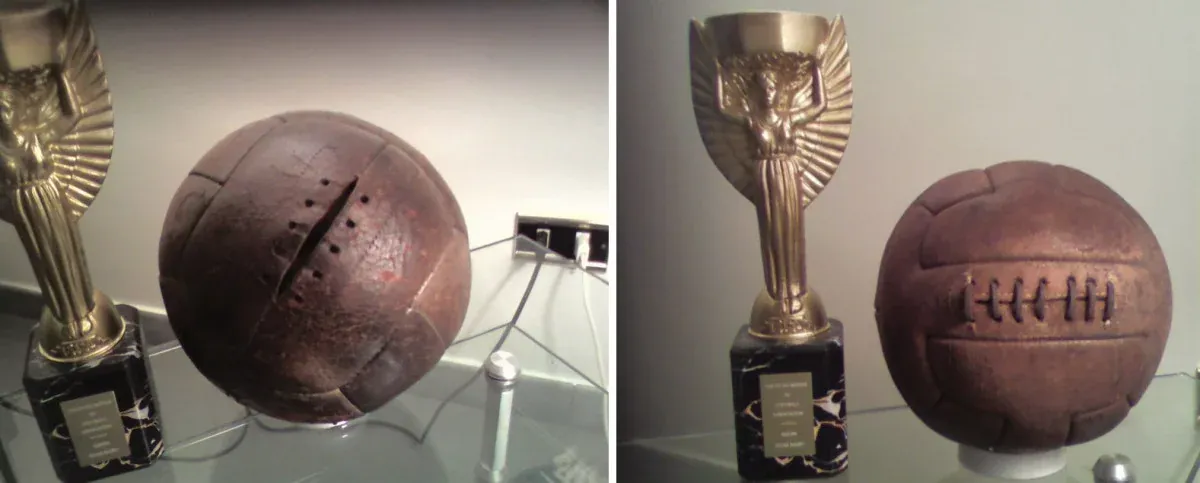
On the left, the Tiento ball (Argentina) and on the right, the T ball (Uruguay) at the FIFA museum.
1934 Italy – The First Official Ball
After the 1930 controversy, FIFA introduced the first identical official ball for all matches: the Federale 102. Twelve balls were used. It was commissioned from Argentine company Tossolini, Valbonesi, Polo & Cia, which had invented the Superball system eliminating external lacing. This seamless lacing revolution changed player safety: before it, leather balls became sharp when wet and could cut foreheads during headers.
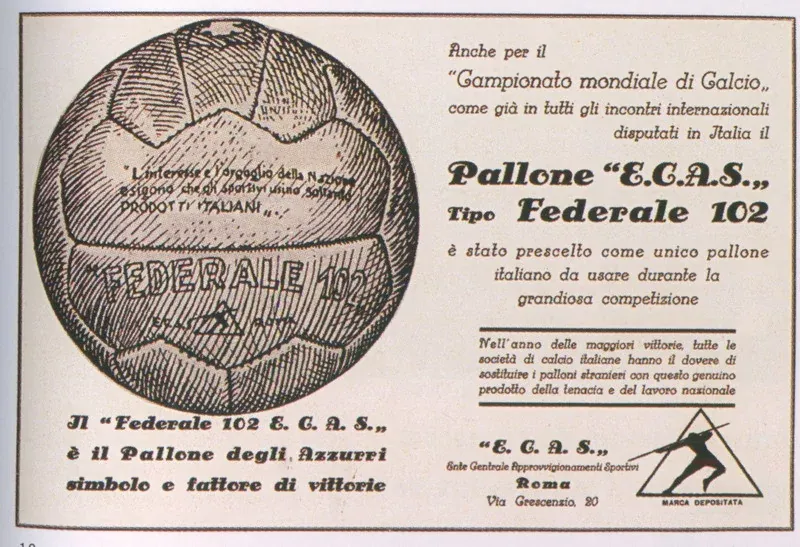
Promotional poster from the era of the Federale 102 football
1938 France – The Allen Ball
The Allen ball was chosen for the 1938 World Cup. It continued the Superball system introduced four years earlier, removing the annoying external seams.
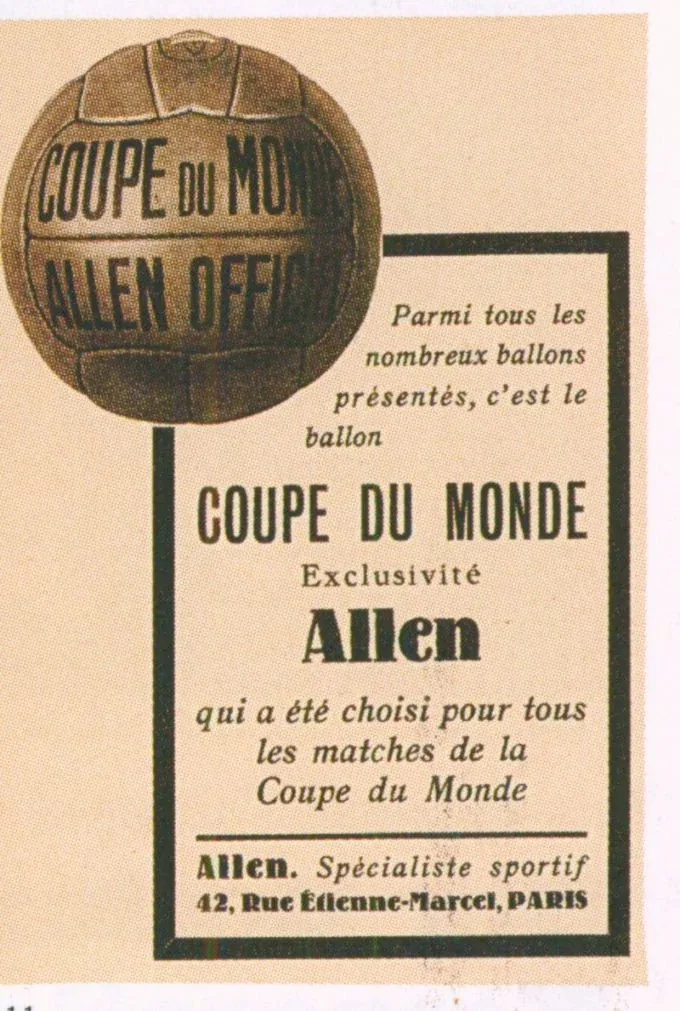
Promotional poster for the Allen ball
1950 Brazil – Super Duplo T
After World War II, the Super Duplo T was used in the 1950 World Cup. By then, better materials allowed more tanned leather, concealed and firmer seams, and a more spherical, lighter, and more reliable ball. The ball from the final is preserved in the American Soccer Museum in the United States.
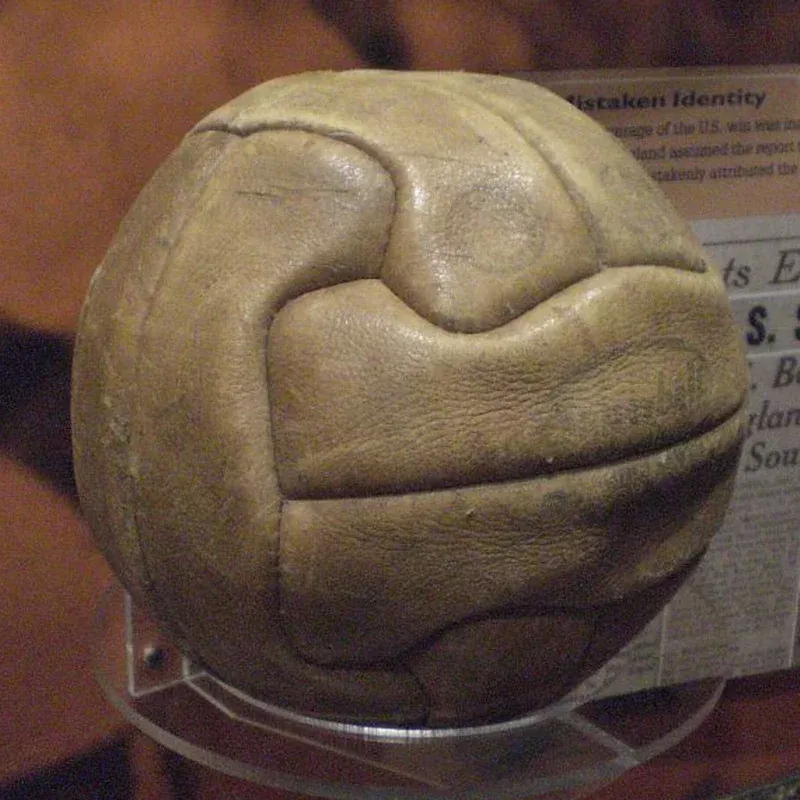
Current state of preservation of the Super Duplo T
1954 Switzerland – Swiss World Champion
The Swiss World Champion ball featured 18 stitched panels with no external seams and a notable orange colour.
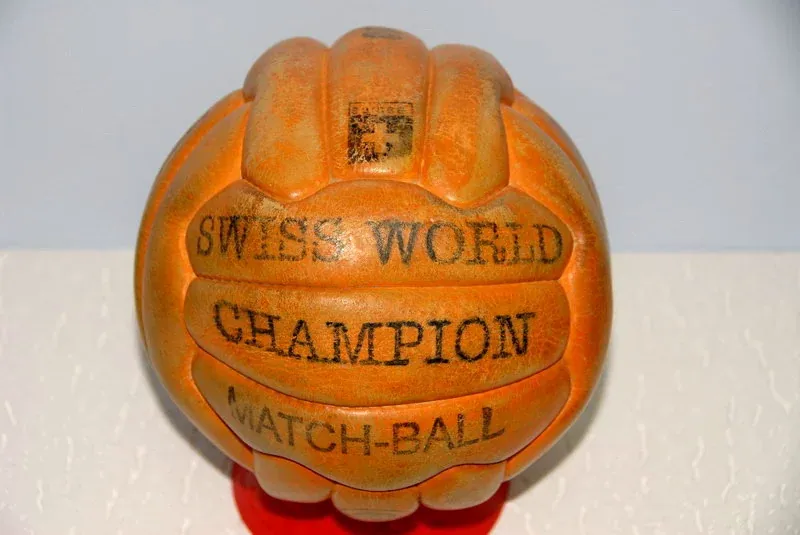
Current state of preservation of one of the footballs that rolled across Swiss pitches in 1954
1958 Sweden – Top Star
The Top Star was a 24-panel ball manufactured in yellow/brown and white leather. For the first time, FIFA held a competition to select the official ball. Ball No. 55 won after a blind test. It was produced by Sydsvenska Läder in Ängelholm, Sweden. The ball used in the final is kept at the Brazilian Football Confederation’s office in Rio de Janeiro.
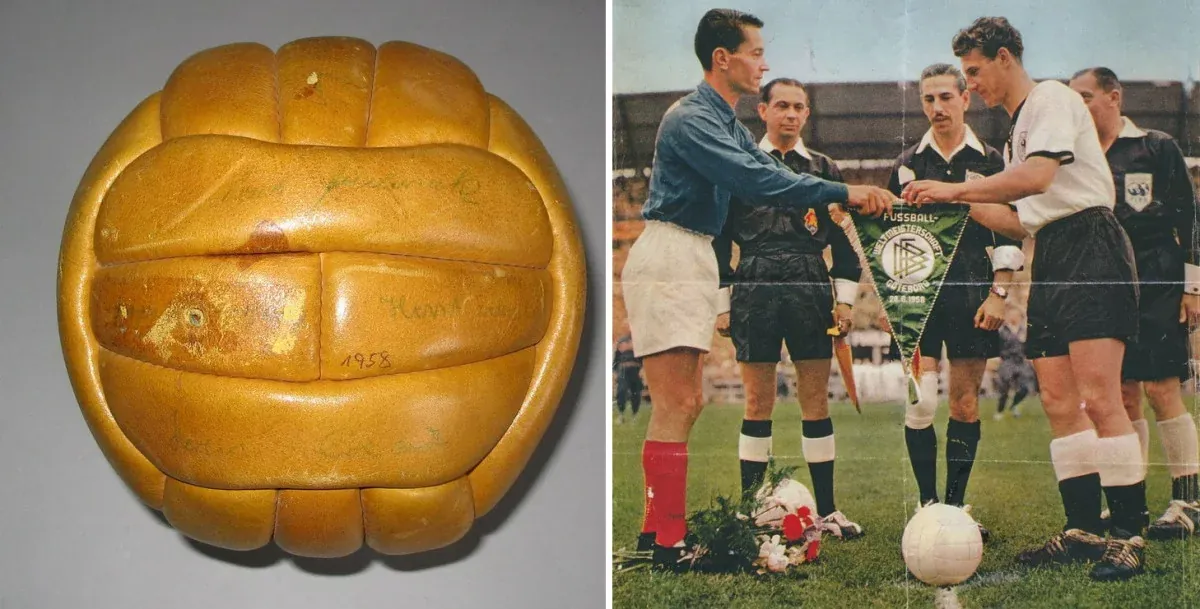
Ball number 55 (left), image of the kick-off between Germany and France (right)
1962 Chile – Mr. Crack
The Mr. Crack ball had 18 yellow leather panels and was manufactured by Custodio Zamora Honorato’s company in Santiago. It later served as the official ball of the Chilean national championship for 18 years.
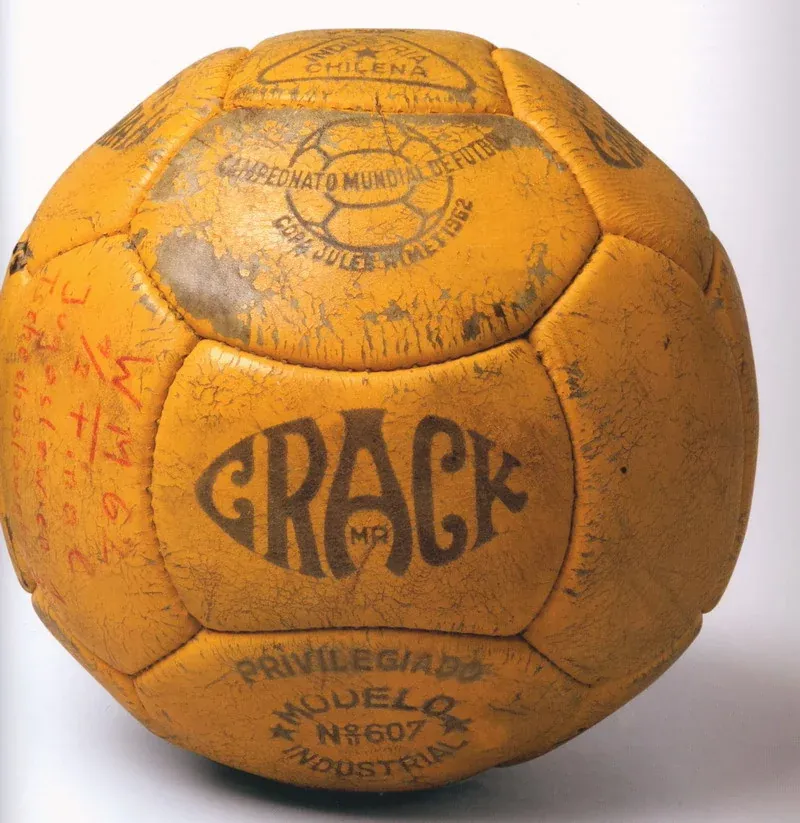
Current state of one of the Mr. Crack that rolled through the fields of Chile in 1962.
1966 England – Slazenger Challenge
The Slazenger Challenge had 25 panels. For the final between England and West Germany, a special orange batch was produced, distinct from the standard balls used in earlier matches.
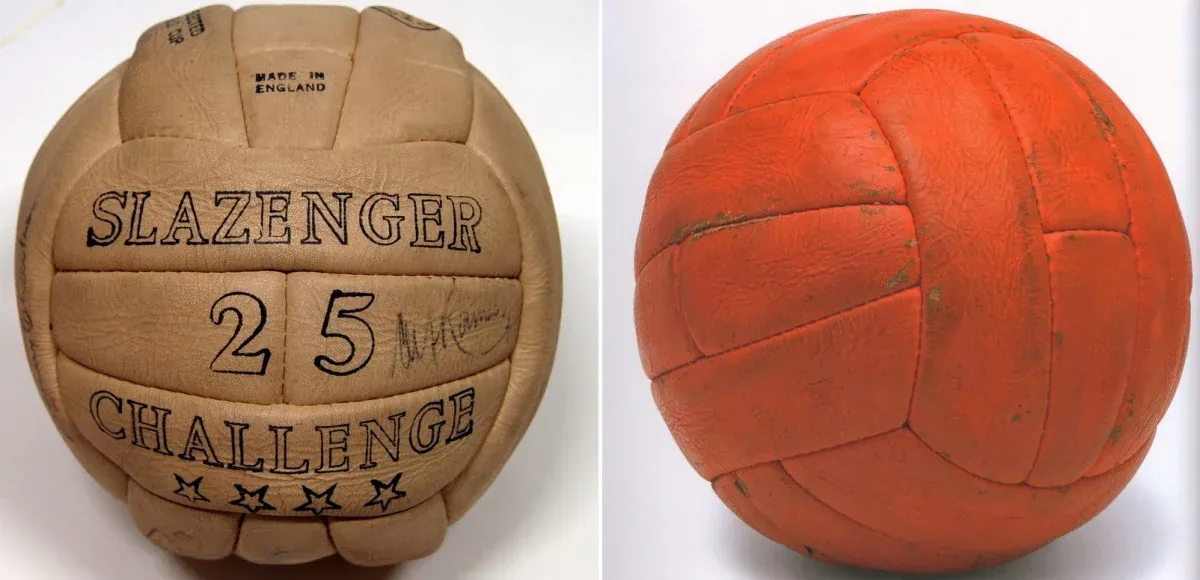
Slazenger Challenge ball (left), special orange version for the final (right)
1970 Mexico – Adidas Telstar
Adidas became the official World Cup football supplier with the Telstar. Its black-and-white design maximised visibility on black-and-white televisions for the first televised World Cup. The name combines “television” and “star”. Balls were manufactured in Spain and France.
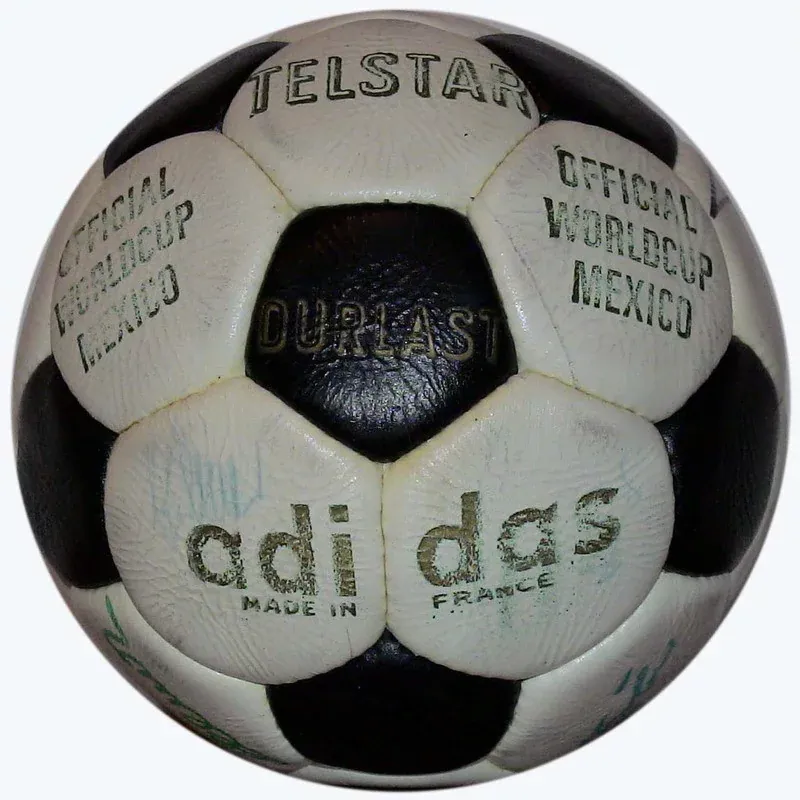
‘Made in France’ version of the official ball of the 1970 World Cup in Mexico
1974 West Germany – Adidas Telstar (Repeat)
Adidas reused the Telstar design for the 1974 World Cup in Germany, again with versions made in France and Spain.
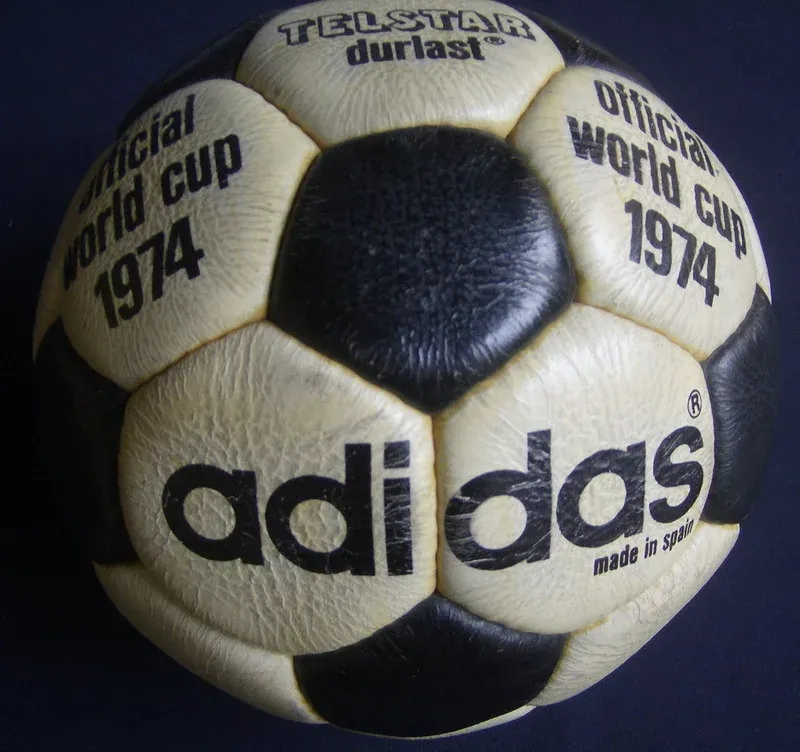
‘Made in Spain’ version of the official ball of the 1974 World Cup in Germany
1978 Argentina – Adidas Tango Durlast
Named after Argentine music, the Tango Durlast featured 20 triads on 36 panels, creating an optical illusion of 12 circles. It offered improved waterproofing over previous balls.
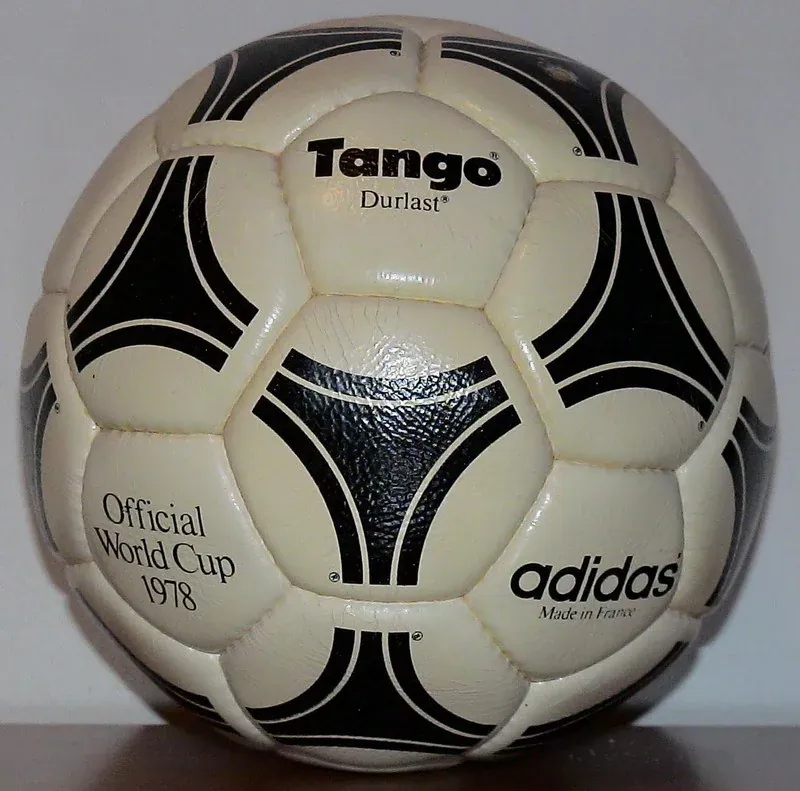
Current condition of one of the balls used in the summer of 1978 in Argentina
1982 Spain – Adidas Tango España
Adidas recycled the Tango design but added revolutionary waterproof stitching to the leather construction, significantly reducing water absorption and weight gain during rainy matches.
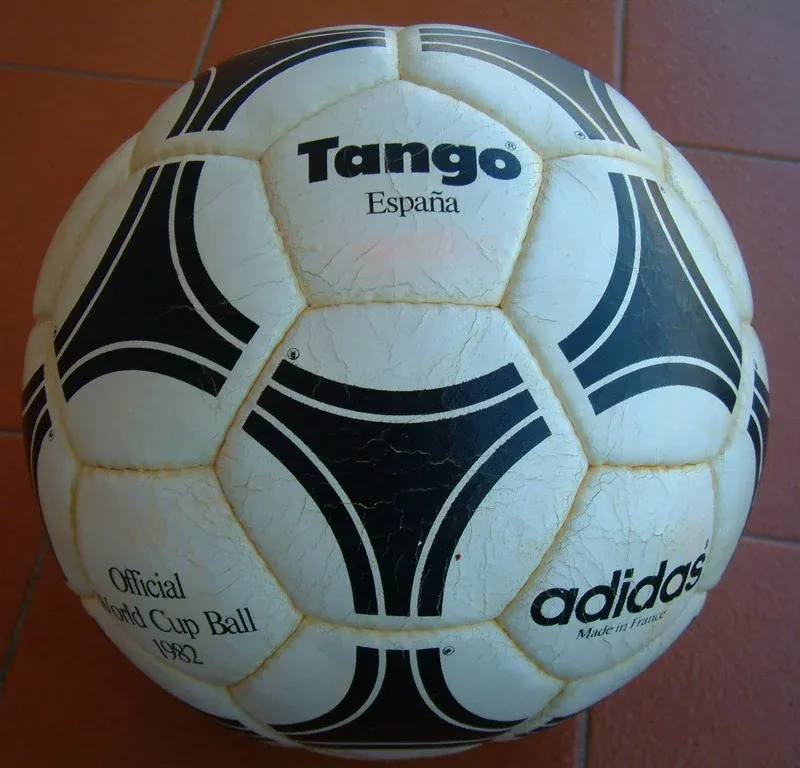
Ball used in one of the World Cup matches, different from those released by adidas.
1986 Mexico – Adidas Azteca
The Azteca was the first professional-grade ball made entirely of synthetic microfiber, eliminating natural leather. Its design paid tribute to Mexico’s indigenous peoples. The synthetic material improved water resistance and durability.
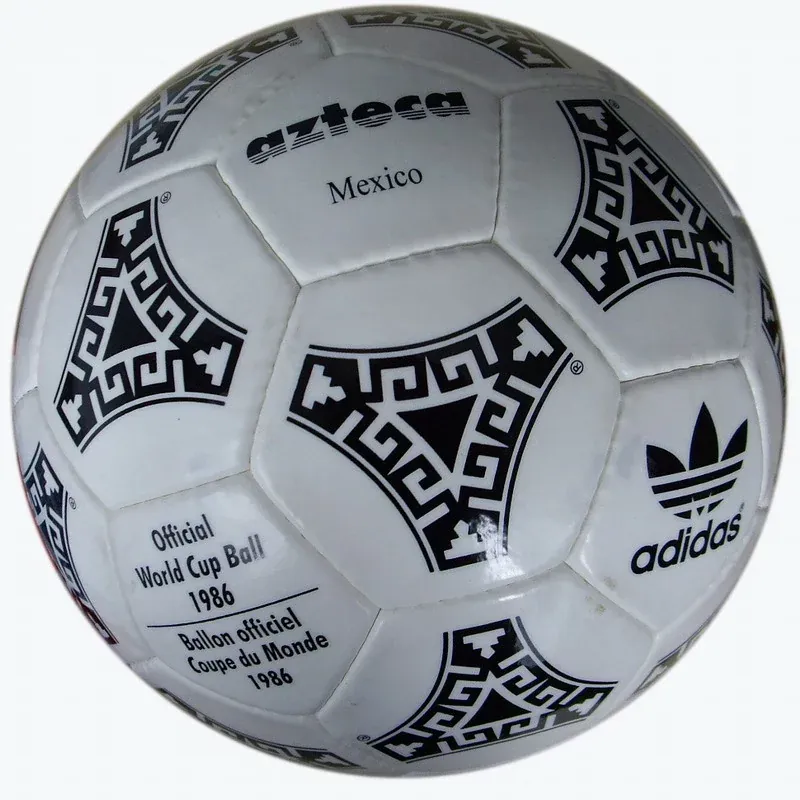
The adidas Azteca ball with which Maradona brought the football world to its feet in July 1986.
1990 Italy – Adidas Etrusco
Inspired by Etruscan art, the Etrusco featured three lion heads on each of its 20 triads. It was the first competition ball with an inner layer of black polyurethane foam, making it more reactive, with better bounce and improved waterproofing.
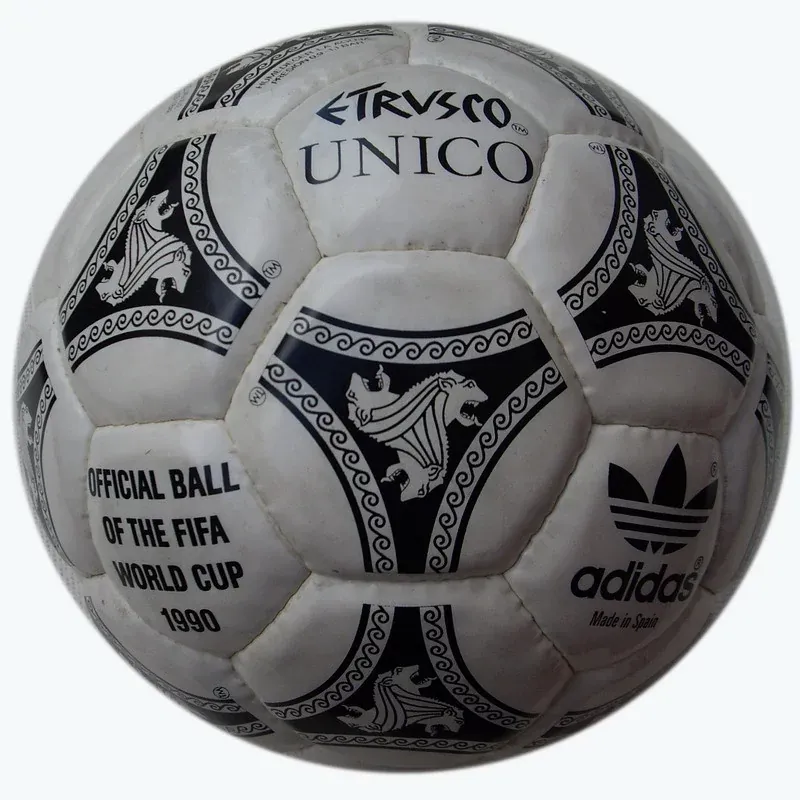
Due to its design and technical evolution, the Etrusco is considered the best football in history.
1994 United States – Adidas Questra
Inspired by the American space race, the Questra used a high-tech white polyethylene foam layer for greater energy recovery, making it softer to control and faster when kicked.
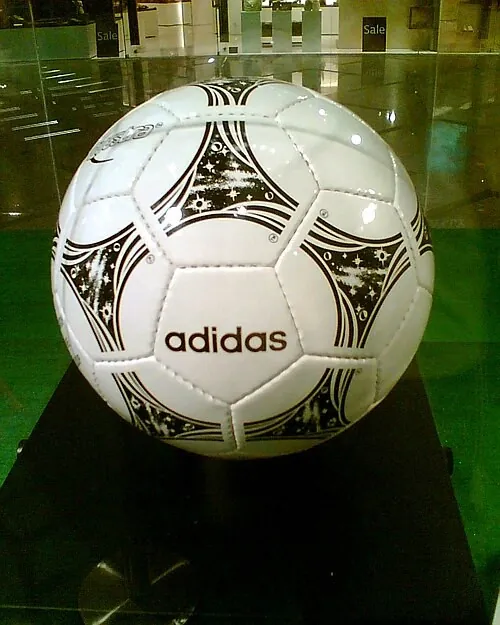
Original 1994 adidas Questra ball manufactured in Europe, something we will never see again in an official ball.
1998 France – Adidas Tricolore
The Tricolore’s name and design referenced the French flag and rooster. It was the last World Cup ball made in Europe; production moved to Morocco, Pakistan, and Thailand. Technologically, it introduced a synthetic foam layer improving durability, energy recovery, and responsiveness.
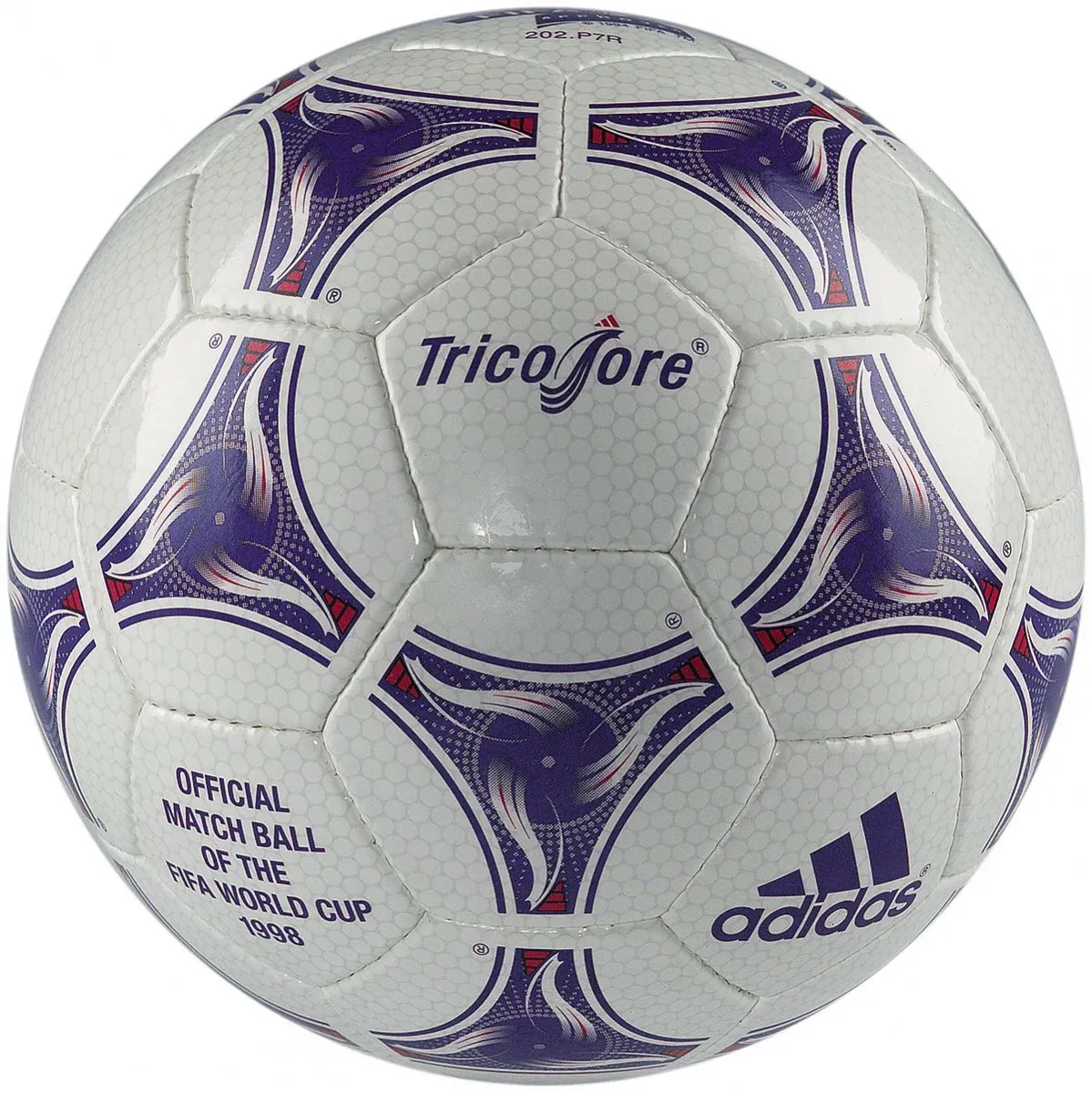
The adidas Tricolore ball, considered by many to be the “last beautiful World Cup ball”.
2002 Korea/Japan – Adidas Fevernova
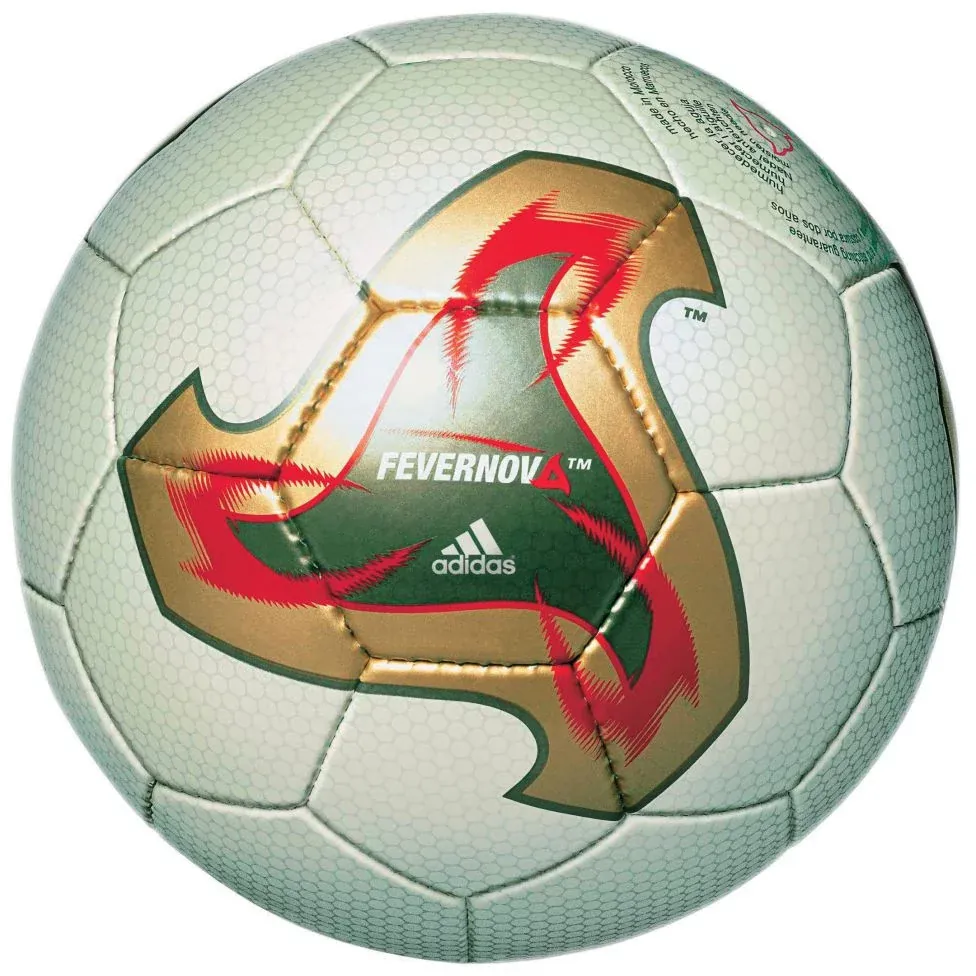
The Fevernova broke away from the long-standing Tango design. Its turbine-inspired decoration and colour reflected Asian innovation. It featured a refined foam layer and a three-layer woven casing for more accurate and predictable flight.
2006 Germany – Adidas +Teamgeist
Named for “team spirit,” the +Teamgeist was the first World Cup ball to be personalised for each match (stadium, teams, date, kick-off time). It introduced a 14-panel construction (down from 32), reducing contact points by 60% for a more spherical shape. Panels were sealed, not stitched, making water absorption nearly zero.
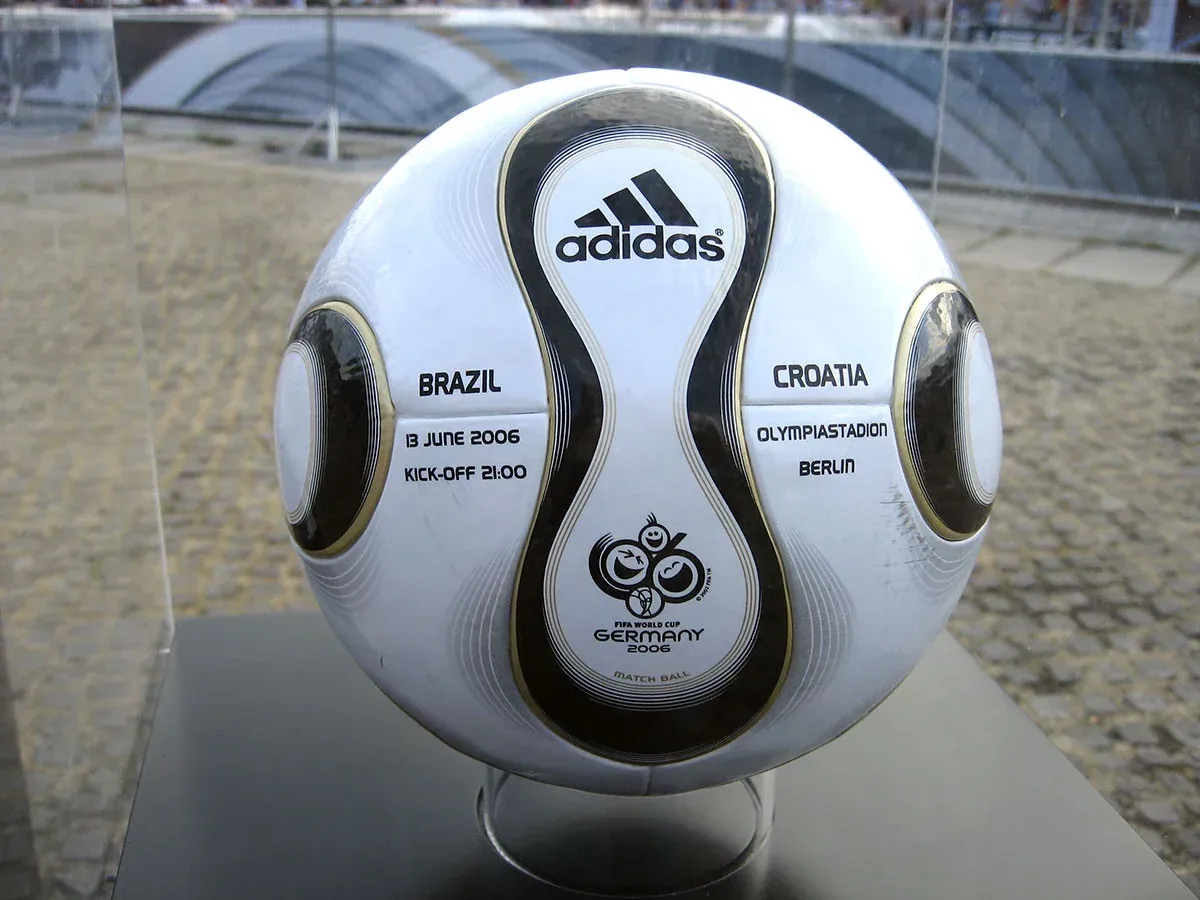
adidas +Teamgeist ball used in the Brazil vs. Croatia match on 13th June 2006
2010 South Africa – Adidas Jabulani
The Jabulani (meaning “to celebrate” in IsiZulu) is widely considered the worst World Cup ball ever. Its eight three-dimensional EVA and TPU panels were intended to improve stability and grip, but goalkeepers criticised its unpredictable trajectory and slippery finish.
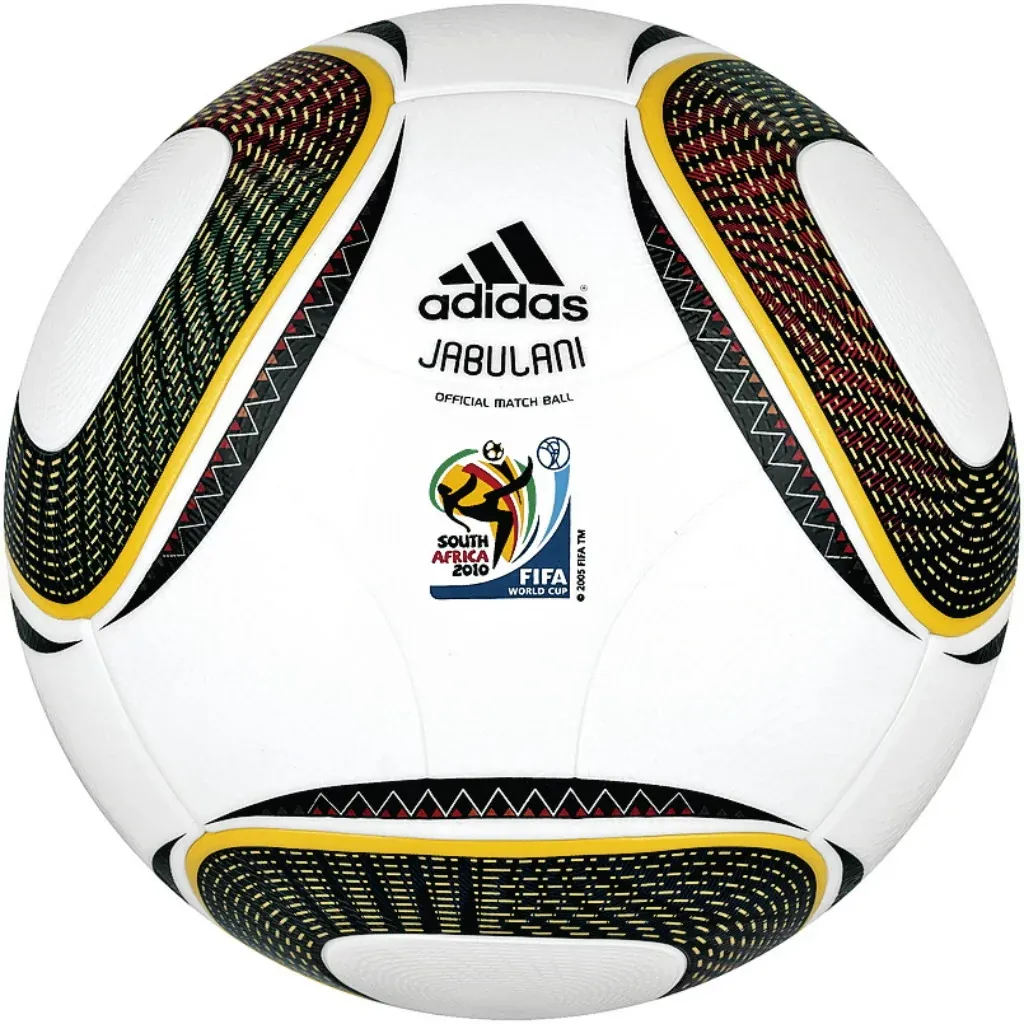
Detail of the Jabulani, a ball with a very attractive design but considered the worst performing ball in World Cup history.
2014 Brazil – Adidas Brazuca
After the Jabulani failure, Adidas created the Brazuca (slang for “Brazilian”). The name was chosen by public vote from finalists Carnavalesca, Bossa Nova, and Brazuca. The ball had six thermally bonded propeller-shaped panels and a textured surface to stabilise flight. It passed the most tests in history, involving over 600 players and 30 teams across three continents.
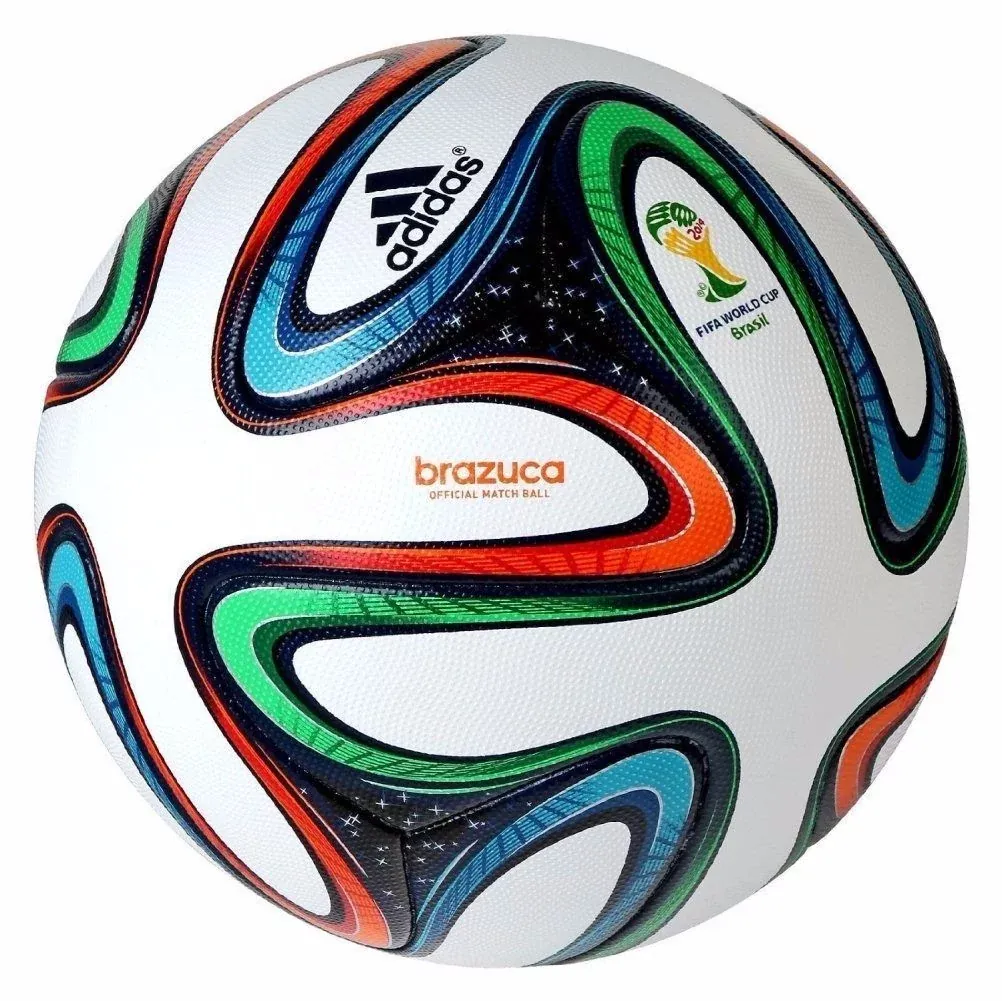
adidas Brazuca, the ball with which the German brand regained the confidence of footballers
2018 Russia – Adidas Telstar 18
The Telstar 18 revived the iconic black-and-white design of the original Telstar. It used six heat-sealed panels, a textured surface for control, and was the first World Cup ball to integrate an NFC chip.
Related search topics
- world cup footballs over the years
- world cup footballs made in pakistan
- world cup footballs history
- world cup football schedule
 WhatsApp
Looking for affordable football boots and jerseys made in China?
Message us on WhatsApp at +86 151 6027 2505, or find us on Instagram at @luxurycoca.
 Instagram